Not All Meltdowns Start With Distress
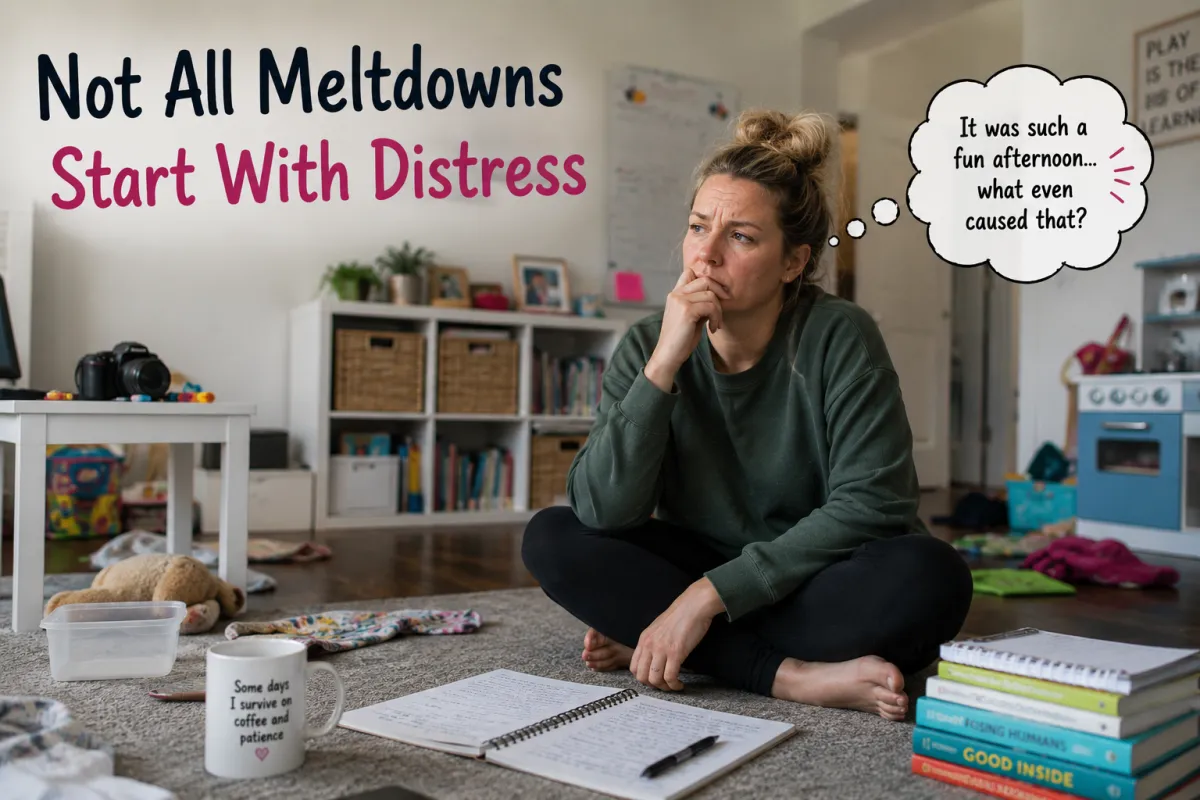
Not All Meltdowns Start With Distress
One of the biggest shifts in how I understand behaviour came when I stopped assuming meltdowns were always caused by something bad.
Because sometimes the lead-up isn't disappointment.
It's possibility.
Excitement.
Anticipation.
Novelty.
Hope.
And honestly, I love the phrase that came up in conversation:
"She's in Anything Is Possible mode."
Because it feels compassionate.
Curious.
Observant.
Not judgmental.
Not pathologising.
Not blaming.
Just:
"Ah. She's in Anything Is Possible mode."
What Is "Anything Is Possible" Mode?
It's that state where the nervous system becomes flooded with possibility.
The brain starts expanding faster than reality can keep up.
Every idea feels available.
Every opportunity feels open.
Every desire feels achievable.
Every outcome feels possible.
And for a while, it's wonderful.
The child is excited.
Creative.
Energetic.
Optimistic.
Engaged.
But possibility can become overwhelming.
Because eventually reality starts introducing limits.
And that's where things often unravel.
The Crash Isn't About The Event
The meltdown may happen when:
a plan changes
a sibling says no
a shop closes
an activity ends
a visitor leaves
a boundary appears
reality becomes smaller than the imagined possibilities
From the outside, the reaction can seem disproportionate.
But the child isn't only grieving what happened.
They're grieving all the possibilities that were alive in their mind moments before.
You'll Start Seeing It Everywhere
Once you notice it, you'll spot it all over family life.
Before birthdays.
Before holidays.
Before visitors arrive.
After unexpected treats.
After getting something new.
After early school pickups.
After hearing exciting news.
After being told maybe.
After a surprise.
After anything that dramatically expands possibility.
Parents are often prepared for distress.
They're less prepared for excitement to create dysregulation.
But nervous systems don't only struggle with negative emotions.
Sometimes they struggle with big emotions.
Full stop.
Why This Matters
Because when we don't recognise "Anything Is Possible" mode, we often misread what comes next.
We assume:
"They're ungrateful."
"Nothing is ever enough."
"They're being unreasonable."
"Why are they upset? This was supposed to be fun."
But what if the behaviour isn't about ingratitude?
What if it's about nervous-system overload?
What if possibility itself became bigger than the child's capacity to hold?
That creates a very different response.
Less frustration.
More understanding.
A Language Shift
One of the most powerful things we can do as parents is change the language we use.
Not because words magically change behaviour.
But because words change what we notice.
"She's getting out of control."
Feels very different from:
"She's in Anything Is Possible mode."
One creates urgency.
The other creates understanding.
One focuses on stopping behaviour.
The other helps us recognise a nervous-system state.
And when we can recognise the state, we often respond more effectively.
Not All Dysregulation Begins With Threat
Some dysregulation begins with joy.
Some begins with hope.
Some begins with anticipation.
Some begins with a nervous system trying to hold more possibility than it can comfortably manage.
Which means one of the most important things we can learn is this:
Not all meltdowns start with distress.
Some start with excitement.
The distress comes later, when reality catches up.