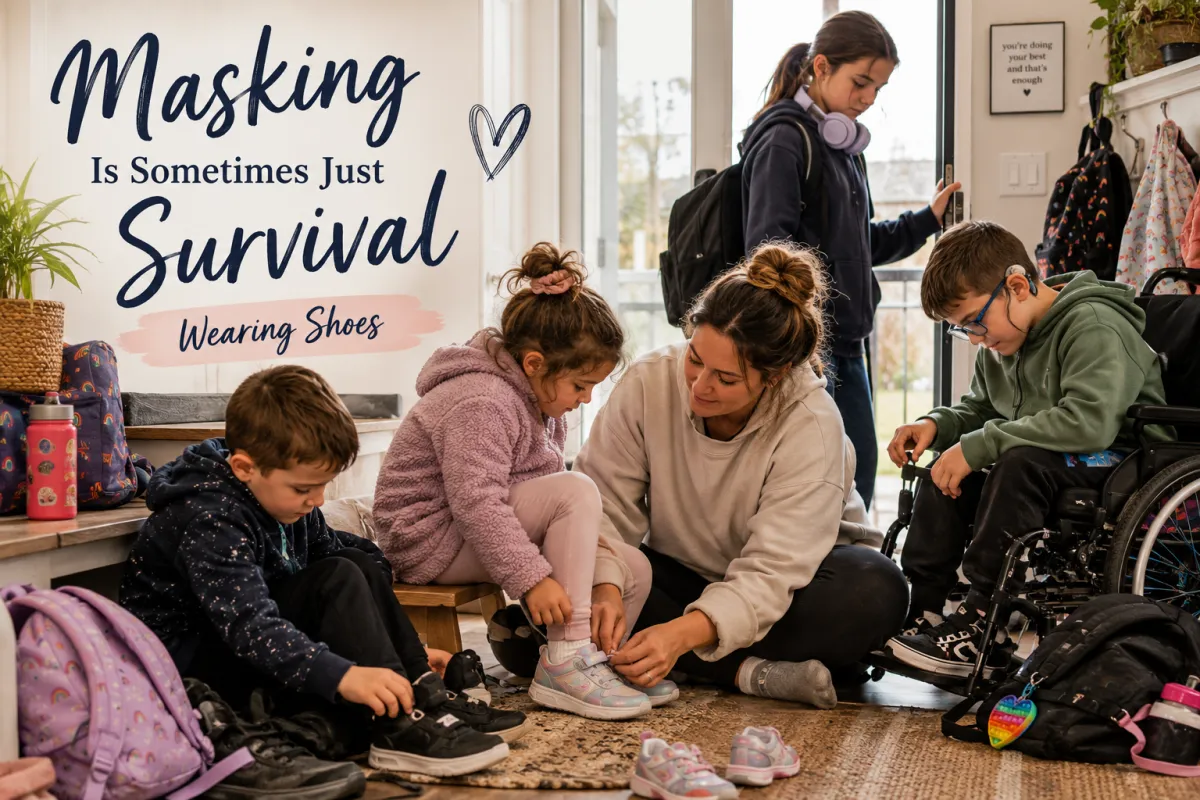
Masking Is Sometimes Just Survival Wearing Shoes
Masking Is Sometimes Just Survival Wearing Shoes
One of the biggest misconceptions about masking in neurodiversity is this idea that it is always about pretending.
Pretending to be someone you’re not.
Pretending to fit in.
Pretending to cope.
And yes — sometimes masking can look like social performance.
But honestly?
For many neurodiverse people, masking has very little to do with impressing others.
It has everything to do with survival.
Masking Is Often Forcing Yourself Through Softness
Masking is sometimes forcing your way through your “soft” feelings to make way for survival.
Pushing past:
exhaustion
overwhelm
sensory pain
grief
emotional needs
shutdown signals
burnout warnings
…because life still requires functioning.
Kids still need feeding.
Appointments still need attending.
Forms still need filling out.
Work still exists.
Laundry still piles up.
The world does not pause because your nervous system is struggling.
So we keep moving.
Not because things are fine.
Because stopping can feel dangerous.
The Outside World Calls This “Coping”
This is where so much misunderstanding happens.
People see:
a parent who still showed up
someone who still answered emails
someone who still looked presentable
someone who still sounds articulate
someone still managing basic responsibilities
And they assume:
“They’re coping.”
But what they often fail to see is the enormous force required to maintain that functioning.
The mental calculations.
The self-regulation.
The pushing through.
The recovery time.
The sensory management.
The internal negotiations happening every single hour.
What looks like capability is often a carefully balanced nervous system trying desperately not to collapse.
“Just Stop Masking” Is Not That Simple
This is why advice like:
“Just stop masking”
can feel almost absurd to many neurodiverse people.
Because underneath the mask is not always freedom.
Sometimes underneath the mask is:
burnout
shutdown
depression
overwhelm
housing instability
parenting pressure
financial stress
fear of completely falling apart
And WE know it.
For many ND people, the mask is not vanity.
It is scaffolding.
A temporary structure holding the system together long enough to survive the day.
And honestly?
When people casually suggest:
“Just let yourself fall apart.”
What many neurodiverse people hear is:
“Just risk everything.”
Neurodiverse People Often Learn To Self-Manage Because We Have To
Many autistic and neurodiverse people become highly skilled at recognising “the spiral.”
The slow slide into:
burnout
shutdown
emotional collapse
sensory overwhelm
nervous system failure
So we build systems to avoid it.
We learn our warning signs.
We manage our energy carefully.
We create recovery rituals.
We maintain small pieces of structure.
We force ourselves through difficult moments because we know what happens if we stop completely.
Not because we are thriving.
Because we are trying to survive.
And sometimes that survival becomes so normalised that even we stop recognising how hard it actually is.
The Problem With Looking Functional
One of the cruelest realities neurodiverse people face is this:
the better we become at survival, the less support we often receive.
Because support systems tend to respond to visible collapse.
Not invisible strain.
So people hear:
“I’m struggling.”
…but respond to appearance instead of words.
“You seem capable.”
“You present well.”
“You don’t look like you’re drowning.”
And those assumptions can become barriers to:
support
compassion
accommodations
understanding
practical help
Because functioning externally is often mistaken for ease internally.
When in reality, many neurodiverse people are surviving through enormous effort nobody else can see.
At TIDY ND, We Talk About The Invisible Load
Here at TIDY ND, we understand that functioning does not automatically mean flourishing.
We understand that:
capability can exist alongside exhaustion
structure can exist alongside overwhelm
functioning can exist alongside survival mode
And we believe neurodiverse families deserve support before collapse happens.
Not after.
That is why TIDY ND is built around nervous-system-aware support.
Not perfection.
Not unrealistic productivity.
Not forcing people to “push harder.”
But helping neurodiverse people create sustainable systems that work with their nervous systems instead of against them.
Systems that include:
flexibility
recovery
compassion
realistic expectations
fall-back plans
baby steps forward
Because masking is not always pretending.
Sometimes masking is survival wearing shoes.
And honestly?
That deserves far more understanding than most people realise.
Follow along for more: www.tidynd.com/nestnews