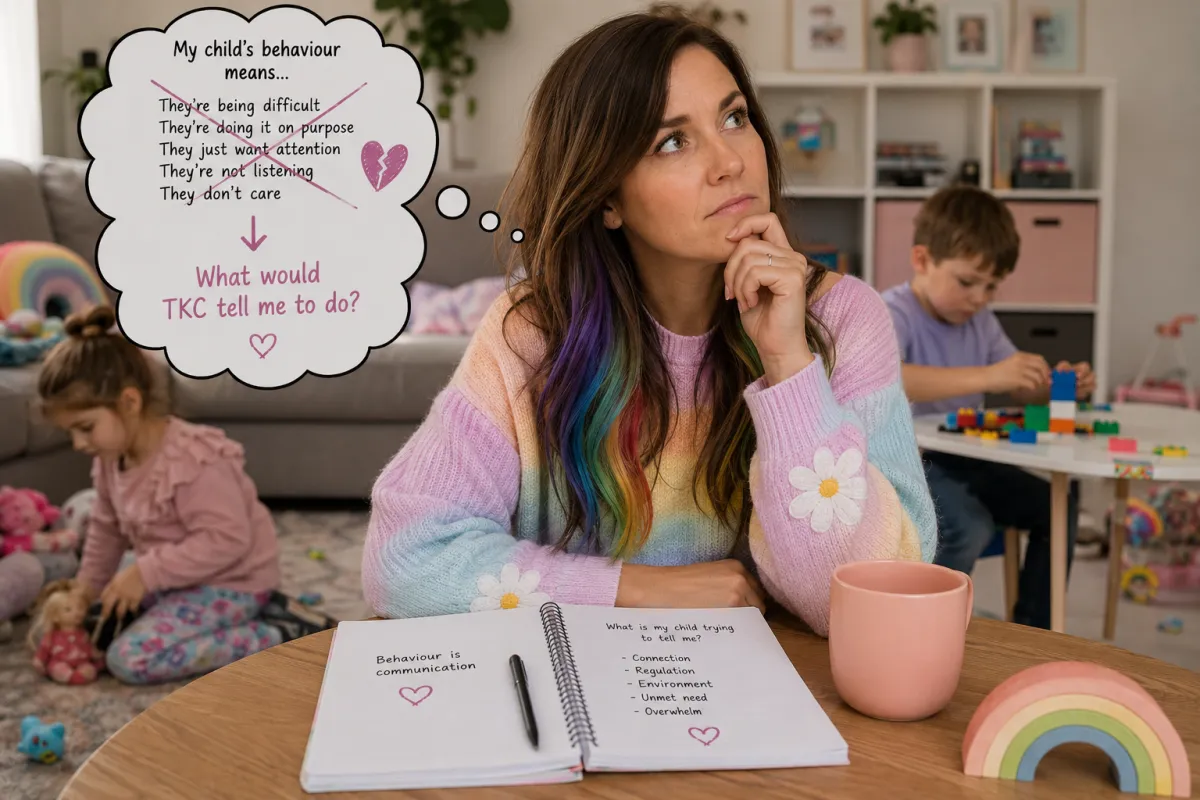
The Mistake Most People Make When Reading Behaviour
The Mistake Most People Make When Reading Behaviour
The Problem
Behaviour gets our attention.
It's loud.
It's visible.
It's often inconvenient.
When a child refuses, argues, cries, hits, avoids, shuts down, or melts down, most adults immediately start trying to understand what they're seeing.
The problem is that many of us were taught to interpret behaviour very quickly.
We were taught that behaviour means something specific.
Refusal means defiance.
Avoidance means laziness.
Big emotions mean overreaction.
Shutting down means disengagement.
The challenge is that human behaviour is rarely that simple.
And when we misunderstand behaviour, we often misunderstand the support that is needed.
Why It Happens
Our brains are designed to make fast judgments.
When we see behaviour, we naturally search for explanations.
We want certainty.
We want answers.
We want the situation to make sense.
The difficulty is that behaviour only provides part of the information.
Behaviour tells us what happened.
It doesn't automatically reveal:
What happened beforehand
What the child was experiencing internally
What demands were present
What skills were required
What stressors were building
What the child was trying to achieve
What support may be needed
Without that information, we often fill in the gaps ourselves.
And that's where mistakes can happen.
What Most People Miss
The most common mistake people make when reading behaviour is assuming that behaviour explains itself.
In other words, they see the behaviour and immediately decide what it means.
But behaviour is not an explanation.
Behaviour is evidence.
Imagine walking into a room and finding water on the floor.
The water tells you something happened.
But it doesn't tell you why.
Perhaps a pipe burst.
Perhaps someone spilled a drink.
Perhaps a pet knocked something over.
The visible outcome is the same.
The cause could be completely different.
Behaviour works the same way.
The behaviour itself is only one piece of information.
The context is what helps us understand it.
The TKC Perspective
At TKC, we view behaviour as a clue rather than a conclusion.
A clue invites curiosity.
A conclusion closes the investigation.
When we treat behaviour as a conclusion, we stop asking questions.
We assume we already know.
When we treat behaviour as a clue, we become detectives.
We start exploring:
What happened before this?
What patterns are emerging?
What needs might be present?
What skills were required?
What challenges may be contributing?
This approach often uncovers information that would otherwise remain hidden.
The goal isn't to excuse behaviour.
The goal is to understand the pattern behind it.
Because the pattern is usually where the solution lives.
A Practical Example
Imagine two children who both refuse to start their homework.
From the outside, the behaviour is identical.
Both say no.
Both avoid the task.
Both become upset when encouraged to begin.
It would be easy to assume they have the same problem.
But when we investigate further, we discover very different stories.
The first child is anxious about making mistakes.
The second child doesn't understand the instructions.
The behaviour is the same.
The underlying challenge is completely different.
If we only respond to the behaviour, we may miss both problems.
If we understand the context, we can provide support that actually fits.
This is why behaviour should never be viewed in isolation.
Reflection Questions
The next time behaviour catches your attention, consider asking:
What am I assuming this behaviour means?
What evidence do I actually have?
What happened before this behaviour occurred?
What might the child be experiencing?
What skills were required in this moment?
What pattern is emerging over time?
These questions help shift us from assumption to understanding.
And understanding often changes everything.
Summary
The biggest mistake people make when reading behaviour is assuming the behaviour explains itself.
Behaviour tells us what happened.
It does not automatically tell us why.
When we jump straight to conclusions, we risk misunderstanding the child, the situation, and the support that may be needed.
Through a TKC lens, behaviour is not the end of the story.
It's the beginning.
It's a clue.
An invitation to become curious.
An opportunity to look for patterns.
Because behaviour is often the visible part of something much bigger happening underneath the surface.
Nobody is the problem.
The pattern is the problem.
And behaviour is one of the clues that helps us find it.
Find out more here: The Kid Connection