The Most Surprising Part Wasn't The Script
The Most Surprising Part Wasn't The Script
I've spent years trying to understand behaviour.
Reading.
Researching.
Testing ideas.
Building internal frameworks for my kids.
Looking for patterns.
Trying to make sense of what was happening in my family in real time.
And then something happened that genuinely surprised me.
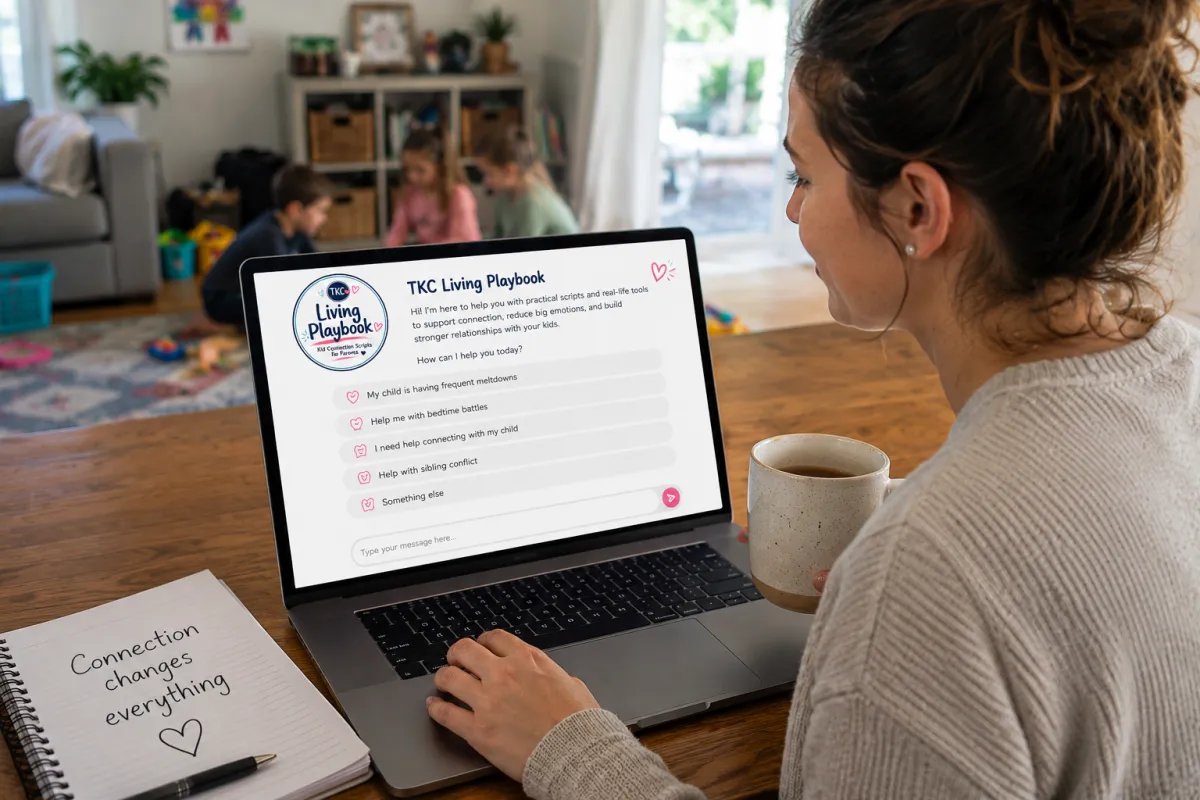
I accidentally created the TKC Living Playbook.
I entered what was actually happening.
Not a perfect case study.
Not a neatly packaged scenario.
The messy, real-life version.
The sibling conflict.
The overwhelm.
The emotional load.
The context.
The things that matter but often get left out.
And it generated scripts that worked.
Not generic parenting scripts.
Not ideal-world scripts.
Scripts that actually fit what was happening.
It Was Incredible To Experience
Not because it magically solved everything.
Not because my children instantly became regulated.
But because for the first time, I wasn't trying to hold the entire system in my head.
I wasn't mentally sorting through:
nervous systems
developmental stages
attachment needs
grief
sensory factors
relationship dynamics
context
timing
my own capacity
While simultaneously trying to decide what to say next.
The Playbook did the heavy lifting.
It translated complexity into action.
Parents Are Often Asked To Be Human Supercomputers
This is something I think gets missed.
Most parenting advice assumes that in the middle of a stressful moment, you'll somehow be able to:
Pause.
Analyse.
Interpret.
Remember a framework.
Choose the right strategy.
Regulate yourself.
Predict the outcome.
Then deliver the perfect response.
Remember the perfect response.
All while somebody is crying, yelling, running away, or falling apart.
That's an enormous cognitive load.
Especially for parent-carers already carrying years of accumulated stress.
And our Executive Function (Our thinking brain) frequently goes offline due to parent-carer demands...
What Felt Different
What felt different wasn't simply having words to say.
It was having words that matched the reality of the situation.
Words informed by context.
Words informed by patterns.
Words informed by the bigger picture.
Because behaviour doesn't happen in isolation.
And neither should our responses.
It became my EF (my thinking brain - the rational bit) when my actual EF was offline.
The Real Gift
The real gift wasn't the script.
The real gift was reducing the amount of thinking I had to do in the moment.
Reducing the guesswork.
Reducing the self-doubt.
Reducing the endless loop of:
"Am I handling this right?"
Because when you're already carrying so much, sometimes what you need isn't another framework to learn.
You need a way to apply what you already know.
In real time.
Inside real life.
And experiencing that was incredible.
Not because it replaced me.
But because it supported me while I was doing one of the hardest jobs there is.
I am so excited to be introducing this to the world when it launches (in my spare time biz here at TIDY ND)
I can't wait to see who it could help - let me know if it might be useful to you?!
If you are in my email list - HIT REPLY and let me know!